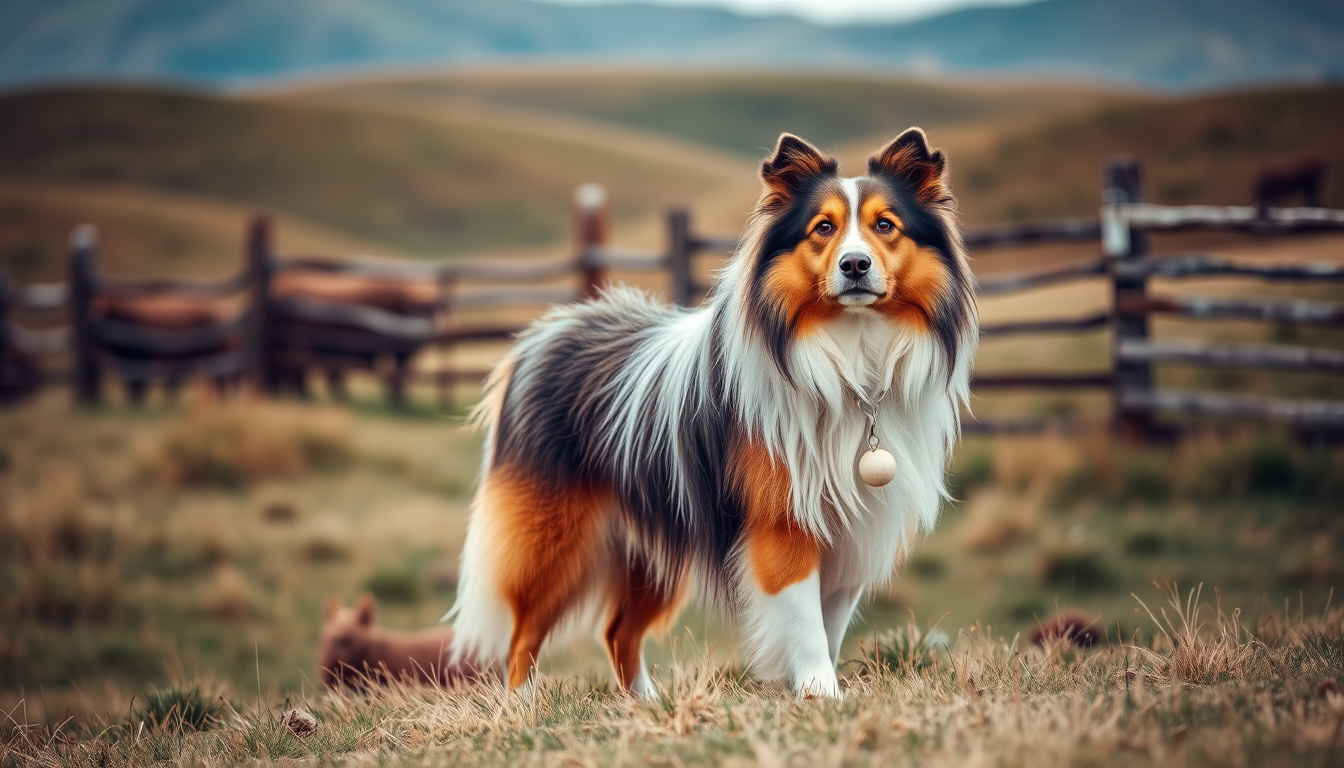
Picture a small, fluffy dog that herds everything in sight—children, squirrels, even the cat—and barks to announce every visitor. That’s the Shetland Sheepdog, a breed the United Kennel Club (official breed registry) describes as affectionate, loyal, highly intelligent, and extremely willing.
Height: 13–16 inches (33–41 cm) ·
Weight: 14–27 lbs (6.4–12.2 kg) ·
Life Expectancy: 12–13 years ·
Coat: Long, double coat ·
Temperament: Intelligent, playful, energetic ·
Energy Level: Medium-high
Quick snapshot
- Originated in the Shetland Islands, Scotland (Fédération Cynologique Internationale (breed standard authority))
- Distinct breed, not a miniature Collie (FCI breed standard)
- Vocal and alert – prone to barking (HP Animal Hospital (veterinary practice))
- Whether a Sheltie is suitable for families with very young children depends on individual temperament and training (American Shetland Sheepdog Association (breed club))
- Whether an apartment lifestyle works without excessive barking hinges on adequate exercise and mental stimulation (HP Animal Hospital)
- Recognized by the American Kennel Club in 1911 (American Shetland Sheepdog Association)
- Royal Kennel Club standard sets ideal height at 37 cm for dogs, 35.5 cm for bitches (The Royal Kennel Club (UK breed registry))
- Prospective owners should research common health conditions like hip dysplasia and eye disorders (Figo Pet Insurance (pet health coverage provider))
- Early socialization and consistent training are essential (NJ Sheltie Rescue (breed-specific rescue))
Eight key traits, one pattern: the Sheltie is a small herder with a big personality.
| Height | 13–16 inches (33–41 cm) |
| Weight | 14–27 lbs (6.4–12.2 kg) |
| Life Expectancy | 12–13 years |
| Coat | Long double coat |
| Temperament | Intelligent, playful, energetic |
| Energy Level | Medium-high |
| Hypoallergenic | No |
| AKC Group | Herding |
What are the disadvantages of Sheltie?
Common health issues
- Hip dysplasia, Collie Eye Anomaly, and thyroid problems are known concerns (Figo Pet Insurance).
- Skin allergies also affect the breed (HP Animal Hospital).
Exercise needs
- Shelties require at least 30–60 minutes of daily exercise (Hill’s Pet Nutrition (veterinary nutrition brand)).
- Without enough activity, boredom leads to destructive chewing and excessive barking (HP Animal Hospital).
Grooming requirements
- The long double coat needs brushing 2–3 times per week, more during shedding season (Hill’s Pet Nutrition).
- Professional grooming every 6–8 weeks is recommended to prevent matting (HP Animal Hospital).
Barking tendencies
- Shelties are alert and vocal, often barking at strangers or noises (HP Animal Hospital).
- With consistent training, excessive barking can be managed (American Shetland Sheepdog Association).
The pattern: these disadvantages demand a dedicated handler willing to invest daily time and patience.
Is a Sheltie a good family dog?
Temperament with children
- Well-socialized Shelties can be excellent family dogs, though their herding instinct may lead them to nip at heels (American Shetland Sheepdog Association).
- Supervision with very young children is advised (United Kennel Club).
Compatibility with other pets
- They generally get along with other dogs and cats when introduced properly (Hill’s Pet Nutrition).
- Chasing behavior toward small animals may persist (A-Z Animals (breed information resource)).
Energy level and space requirements
- Medium-high energy means they need daily walks and playtime (Hill’s Pet Nutrition).
- A fenced yard is ideal, but a committed owner in an apartment can manage with sufficient exercise (HP Animal Hospital).
Trainability
- Intelligent and eager to please, Shelties respond well to positive reinforcement (American Shetland Sheepdog Association).
- They can be sensitive; harsh methods are counterproductive (NJ Sheltie Rescue).
The trade-off Shelties are bright and trainable, but their sensitivity means owners must be patient and consistent. A family that invests in early socialization gets a devoted companion; one that rushes may get a nervous barker.
The implication: success depends on the family’s willingness to provide structure and socialization from puppyhood.
Are Shetland Sheepdogs Irish?
Origins in Shetland Islands
- The breed originated in the Shetland Islands, Scotland, not Ireland (FCI breed standard).
- The name “Shetland Sheepdog” directly references its island heritage (The Royal Kennel Club).
Relation to Irish dog breeds
- Despite occasional confusion, the Sheltie is not an Irish breed (United Kennel Club).
- Irish breeds like the Irish Setter or Irish Wolfhound are unrelated in origin and physique.
History as herding dog
- Developed as a herding dog for sheep on the rugged Shetland Islands (FCI breed standard).
- The breed may have been influenced by Rough Collies brought by mainland farmers (The Royal Kennel Club).
The catch: confusing the name with an Irish connection misleads prospective owners about the breed’s true heritage.
Is a Sheltie just a miniature Collie?
Differences in size
- Shelties stand 13–16 inches at the shoulder; Rough Collies stand 22–26 inches (The Royal Kennel Club).
- Weight difference is proportional: Shelties 14–27 lbs versus Collies 50–75 lbs.
Temperament differences
- Both are affectionate and intelligent, but Shelties tend to be more reserved with strangers (United Kennel Club).
- Collies are often more easygoing and less vocal (A-Z Animals).
Physical characteristics
- The Sheltie has a more refined, fox-like face compared to the Collie’s longer muzzle (FCI breed standard).
- Coat textures are similar, but the Sheltie’s double coat is proportionally denser.
The pattern: the Shetland Sheepdog is a distinct breed with its own standard, not a downsized Collie. Breed registries treat them separately for good reason.
Do Sheltie dogs bark a lot?
Why Shelties bark
- They are alert watchdogs who bark at unfamiliar sounds and visitors (HP Animal Hospital).
- Boredom and lack of exercise amplify the barking (HP Animal Hospital).
How to manage excessive barking
- Positive reinforcement training can reduce unnecessary barking (American Shetland Sheepdog Association).
- Providing mental stimulation (puzzle toys, obedience exercises) helps tire the mind (NJ Sheltie Rescue).
Comparison to other breeds
- Shelties are moderate barkers – less than Beagles or Terriers, but more than Retrievers (A-Z Animals).
- Apartment dwellers should consider this trait carefully.
The reality: for noise-sensitive households, this breed is a poor fit unless the owner commits to ongoing behavior training.
Three dimensions, one takeaway: the Sheltie is a poor fit for noise-sensitive settings unless the owner is willing to invest in behavior training.
Shetland Sheepdog vs Rough Collie: Key differences
Two herders, one confusion – here’s how they stack up.
| Attribute | Shetland Sheepdog | Rough Collie |
|---|---|---|
| Height | 13–16 inches | 22–26 inches |
| Weight | 14–27 lbs | 50–75 lbs |
| Temperament | Reserved with strangers, alert | Outgoing, easygoing |
| Barking level | Moderate-high | Low-moderate |
| Energy level | Medium-high | Medium |
What this means: the Sheltie demands more vigilance and vocalization than its larger cousin.
Breed specifications at a glance
Eleven spec points that define the Sheltie standard.
| Coat | Long, double coat with abundant mane |
| Colors | Sable, black & tan, blue merle; white markings |
| Life Expectancy | 12–13 years |
| AKC Group | Herding |
| Hypoallergenic | No |
| Exercise Required | 30–60 minutes daily |
| Grooming Frequency | Brush 2–3× per week; professional groom 6–8 weeks |
| Training Style | Positive reinforcement, sensitive to harsh correction |
| Common Health Issues | Hip dysplasia, Collie Eye Anomaly, thyroid disorders |
| Good with Children | Yes, with supervision and socialization |
| Good with Other Pets | Generally yes, but may herd small animals |
The pattern: the Sheltie’s specifications show a compact, high‑maintenance herder that requires consistent care.
Upsides and downsides
Upsides
- Intelligent and trainable (ASSA)
- Affectionate with family (Hill’s)
- Loyal watchdog (UKC)
- Eager to please (ASSA)
Downsides
- High barking tendency (HP Animal Hospital)
- Needs daily exercise (Hill’s)
- Extensive grooming required (HP Animal Hospital)
- Herding instincts may cause nipping (A-Z Animals)
The catch: the upsides come with real trade‑offs that demand an owner’s time and consistency. If you’re considering a Sheltie, you might also be interested in Lemmikin adoptio lähelläni.
What we know for sure – and what’s still open
Confirmed facts
- The Shetland Sheepdog originated in the Shetland Islands, Scotland, not Ireland (FCI).
- It is a distinct breed from the Rough Collie (RKC).
- Shelties are known for being vocal and alert (HP Animal Hospital).
- They are intelligent and eager to please (ASSA).
What remains unclear
- Whether a Sheltie is right for a family with very young children depends on individual temperament and training (ASSA).
- Whether an apartment can work without excessive barking depends on exercise and mental stimulation (HP Animal Hospital).
- Whether Shelties are more reserved with strangers than Collies is supported by some sources but may vary greatly between individuals (UKC).
- Whether chasing behavior toward small animals can be fully managed through training remains uncertain for many owners (A-Z Animals).
- Whether a Sheltie is suitable for first‑time owners is debated – while trainable, their sensitivity and barking may challenge novices (NJ Sheltie Rescue).
- Whether professional grooming every 6–8 weeks is mandatory or can be replaced by diligent home care depends on coat condition (HP Animal Hospital).
- Whether the breed’s herding instinct leads to nipping in all individuals is not guaranteed; some Shelties never nip (ASSA).
Voices from the field
“Shelties have an intense desire to please their owners.”
“Boredom can lead to unwanted barking and chewing.”
“Shetland Sheepdogs may be wary with strangers.”
The consensus is clear: the Sheltie’s strengths come with real demands. For a first‑time owner who wants a quiet, low‑maintenance pet, this breed is likely a mismatch. For an experienced handler who can provide structure, exercise, and grooming, the Sheltie offers unmatched loyalty and joy.
In the UK and Ireland markets, the Shetland Sheepdog remains a popular choice for active families with older children and secure gardens. The trade‑off is straightforward: invest in daily training and grooming, or deal with a frustrated barker and matted coat. For the committed owner, the reward is a bright, affectionate companion that thrives on partnership.
a-z-animals.com, youtube.com, hudsonanimalhospitalnyc.com, youtube.com
For a deeper look into the breed’s specific needs, you can explore this detailed guide on Shetland Sheepdog temperament and care.
Frequently asked questions
What is the lifespan of a Shetland Sheepdog?
Shelties typically live 12–13 years when properly cared for, according to Figo Pet Insurance.
How much exercise does a Sheltie need?
At least 30–60 minutes of daily exercise, as recommended by Hill’s Pet Nutrition.
Are Shelties hypoallergenic?
No – they shed year-round and are not considered hypoallergenic (HP Animal Hospital).
Do Shelties shed a lot?
Yes, especially during shedding seasons. Regular brushing helps manage loose hair (Hill’s Pet Nutrition).
What is the best diet for a Shetland Sheepdog?
A high-quality dog food appropriate for small-to-medium breeds, with attention to weight management (Hill’s Pet Nutrition).
How to train a Shetland Sheepdog?
Use positive reinforcement – they are sensitive and respond poorly to harsh corrections (ASSA).
What are common Shetland Sheepdog mixes?
Common mixes include Sheltie-Poodle (Sheltiedoodle) and Sheltie-Corgi – though health outcomes vary and are less documented (A-Z Animals).
How much does a Shetland Sheepdog cost?
Prices range from $800 to $2,500 for a reputable breeder, depending on lineage and location (A-Z Animals).
Related reading

Alex Chen is Editor-in-Chief at Coast Current, overseeing editorial standards, publication decisions and corrections.