
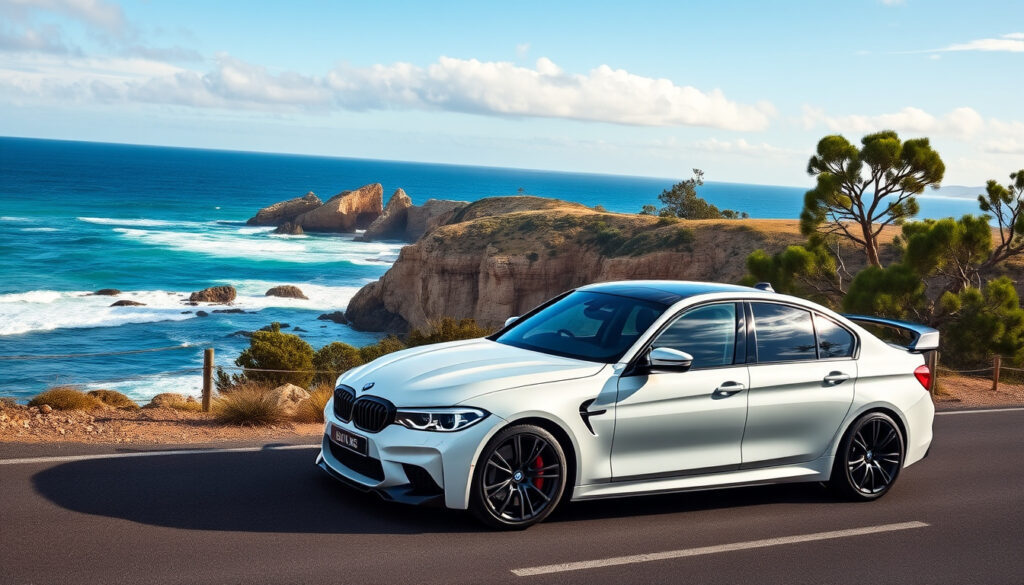
The BMW M3 Competition represents the pinnacle of BMW’s high-performance sedan range, combining a twin-turbo six-cylinder engine with aggressive styling and driver-focused dynamics. Since its introduction, the M3 Competition has established itself as a benchmark in the premium performance segment, offering Australian buyers a choice between traditional rear-wheel drive and modern all-wheel drive configurations.
For 2026, the M3 Competition lineup continues with sedan and wagon body styles, each delivering the signature driving experience expected from BMW’s M division. The current generation, designated G80, launched in 2021 and has since expanded to include the high-performance CS variant alongside the standard Competition specification.
This guide covers Australian pricing, performance specifications, engine details, available variants, and key facts buyers need to know before purchasing an M3 Competition.
What is the BMW M3 Competition price in Australia?
The 2026 BMW M3 Competition carries manufacturer list pricing that varies significantly depending on chosen configuration and drivetrain layout. Understanding these price points helps prospective buyers navigate the ordering process with greater clarity.
2026 Australian Price List
- Manual sedan (rear-wheel drive): $169,100
- Competition xDrive sedan (all-wheel drive): $186,900
- Competition xDrive Touring wagon (all-wheel drive): $188,900
- M3 CS high-performance variant: $253,900
Key Insights
- All prices exclude on-road costs, which vary by state and dealer delivery fees
- The all-wheel drive sedan commands a $17,800 premium over the manual RWD model
- The wagon (Touring) variant costs $2,000 more than its sedan equivalent
- The M3 CS represents a $67,000 premium over the base Competition sedan
- Pricing has increased incrementally, with the 2025 model representing a $3,700 rise from the prior year
- Premium paint finishes add between $2,500 and $7,000 depending on choice
- Carbon ceramic brakes alone cost $19,000 as a standalone option
Actual purchase costs depend on optional equipment, dealer delivery charges, and state-based stamp duty. Buyers should request a drive-away quote from an authorised BMW dealer for precise figures.
Quick Comparison Table
| Specification | Current G80 Competition | F80 Generation |
|---|---|---|
| Engine | 3.0L Twin-Turbo I6 (405kW) | 3.0L Twin-Turbo I6 (331kW) |
| 0-100 km/h | 3.5–3.9 seconds | 4.1 seconds (Competition) |
| Price Range | $169,100–$253,900 | Data unavailable |
| Body Styles | Sedan, Wagon | Sedan only |
The price differential between rear-wheel drive and all-wheel drive models reflects the additional hardware required for the xDrive system, including the driveshafts, transfer case, and torque vectoring technology that distributes power across all four wheels.
What is the BMW M3 Competition 0-100 acceleration?
Acceleration performance represents one of the most compelling reasons buyers choose the M3 Competition over standard 3 Series models. The combination of high-output engine and advanced drivetrain technology delivers straight-line speed that rivals dedicated sports cars.
Acceleration Figures by Configuration
The BMW M3 Competition xDrive, featuring all-wheel drive and the eight-speed automatic transmission, achieves the 0-100 km/h sprint in 3.5 seconds. This figure positions the M3 Competition among the fastest production sedans available in the Australian market.
The rear-wheel drive Competition variant, equipped with the six-speed manual transmission, requires 3.9 seconds to complete the same acceleration run. While 0.4 seconds slower than the xDrive, this remains an impressive result for a manual-equipped vehicle weighing over 1.7 tonnes.
The all-wheel drive system’s ability to deploy 405 kilowatts effectively across all four wheels explains the acceleration advantage over rear-wheel drive variants. Traction optimisation allows the xDrive models to launch more aggressively from standstill.
Torque and Power Delivery
Peak torque of 650 newton metres becomes available between 2,750 rpm and 5,950 rpm, providing a broad power band that enables strong acceleration across the rev range. This flexible delivery suits both track driving and everyday commuting scenarios.
The turbocharged six-cylinder engine maintains linear power buildup throughout the rpm range, avoiding the turbo lag that affected earlier forced-induction designs. BMW’s valvetronic variable valve timing contributes to this responsive character.
Fuel Efficiency Considerations
The 2026 Competition sedan averages 10.2 litres per 100 kilometres, while the wagon variant consumes 10.4 litres per 100 kilometres. These figures reflect combined cycle testing and real-world results typically exceed these figures, particularly under spirited driving conditions.
The stop-start system and brake energy regeneration contribute to fuel savings during urban driving, though performance-oriented driving styles inevitably increase consumption. Drivers expecting sports car thrills should anticipate fuel consumption exceeding 13 litres per 100 kilometres in typical use.
What engine powers the BMW M3 Competition?
The BMW M3 Competition employs a 3.0-litre twin-turbo six-cylinder engine designated internally as the S58. This powerplant represents the high-performance evolution of BMW’s modular engine architecture and delivers the outputs expected from a flagship M division product.
S58 Engine Specifications
The S58 produces 405 kilowatts of power at 6,250 rpm, representing one of the highest specific outputs from any production BMW engine. The twin-scroll turbochargers, positioned within the V-configuration of the cylinder bank, contribute to rapid throttle response and minimal lag.
Key technical features include forged aluminium pistons, strengthened crankshaft, and sodium-filled exhaust valves. These components accommodate the elevated cylinder pressures generated during high-performance operation while maintaining reliability.
The high-performance nature of the S58 engine demands rigorous adherence to BMW’s service schedule. Oil changes using manufacturer-approved lubricants and periodic inspection of turbocharger components help maintain optimal performance over extended ownership periods.
Transmission Options
Buyers select between two transmission configurations. The six-speed manual transmission remains available for purists seeking driver engagement, while the eight-speed automatic transmission delivers quicker shifts and improved efficiency for those prioritising outright performance.
The automatic transmission features paddle shifters mounted behind the steering wheel, allowing manual gear selection without removing hands from the wheel. Sport+ driving mode optimises shift logic for maximum acceleration, holding gears longer before upshifting.
Drivetrain Configurations
The rear-wheel drive configuration pairs exclusively with the manual transmission, delivering the traditional sports car driving experience that M3 enthusiasts expect. This layout suits track days and driving enthusiasts who prioritise driver involvement over traction optimisation.
The all-wheel drive (xDrive) system distributes engine output across all four wheels through an electronically-controlled multi-plate clutch. This technology provides superior traction on wet roads and low-traction surfaces while maintaining the rear-biased driving character essential to the M3 identity.
What is the BMW M3 Competition interior like?
The M3 Competition interior balances daily usability with motorsport-inspired elements that reinforce the vehicle’s performance credentials. BMW integrates functional features alongside premium materials to create a cabin that satisfies both driver demands and passenger comfort expectations.
Seating and Driver Focus
Standard sport seats provide adjustable lumbar support, thigh extension, and memory settings for two drivers. The optional M Carbon bucket seats ($10,000) reduce weight by approximately 10 kilograms while offering enhanced lateral support through their integrated bolsters.
The sports steering wheel, wrapped in leather as standard, features contrast stitching and a thick rim diameter that enhances grip during dynamic driving. Red centre marks on the wheel spokes help drivers identify the straight-ahead position during performance driving.
Technology and Information Display
The 12.3-inch digital instrument cluster presents configurable displays that prioritise performance data when Sport or Sport+ modes activate. G-force indicators, lap times, and engine temperature readings become available alongside traditional speed and rpm readouts.
The 10.25-inch central display controls the iDrive operating system, providing access to navigation, smartphone integration via Apple CarPlay and Android Auto, and vehicle settings. Physical controls for climate and volume remain accessible, avoiding excessive touchscreen dependency.
Research sources do not contain comprehensive interior specifications or features descriptions. Prospective buyers should consult official BMW Australia specifications or visit authorised dealers to evaluate interior options firsthand.
What are the BMW M3 Competition F80 and wagon variants?
The M3 Competition story spans multiple generations, with the F80 (2014–2020) representing the first generation equipped with turbocharged engines, while the current G80 (2021–present) builds upon that foundation with enhanced performance and expanded body style options.
Previous Generation: F80 M3 Competition
The F80 generation introduced the first turbocharged M3, powered by a 3.0-litre twin-turbo six-cylinder engine producing 331 kilowatts. This generation established the template for current Competition models, offering both sedan and convertible body styles before the coupe transitioned to the 4 Series naming convention.
The F80 Competition variant achieved 0-100 km/h acceleration in 4.1 seconds, notably slower than current models but still competitive against contemporary performance sedans. Manual and dual-clutch automatic transmissions remained available throughout this generation.
Current Generation: G80 Sedan and Touring
The G80 M3 Competition expanded the lineup to include both sedan and wagon (Touring) configurations, with the wagon variant offering practical benefits alongside performance credentials. The Touring provides 480 litres of boot space, accommodating luggage for extended trips that would challenge coupe competitors.
The distinctive kidney grille design, larger than previous generations, polarised opinion upon launch but has since been accepted as a signature element of current M vehicles. Combined with aggressive air intakes and carbon fibre accents, the G80 presents a more aggressive stance than its predecessor.
High-Performance M3 CS
The M3 CS occupies the pinnacle of the current range, featuring further engine tuning that increases power output above the standard Competition specification. Lightweight construction through carbon fibre components reduces curb weight while structural enhancements improve overall rigidity.
At $253,900, the M3 CS commands a significant premium over standard Competition variants. This price reflects the limited production numbers, enhanced performance credentials, and exclusive equipment features that distinguish this flagship model.
BMW M3 Competition Generational Timeline
The M3 lineage spans four decades of continuous development, evolving from a lightweight homologation special to a sophisticated high-performance sedan. Understanding this progression helps contextualise the current Competition specification within the model’s heritage.
- 1986 – E30 M3: Original M3 introduced with 2.3-litre four-cylinder engine producing 175 kilowatts. Built primarily for motorsport homologation, with road cars forming the basis for touring car and rally competition.
- 1992 – E36 M3: Second generation featured a 3.0-litre six-cylinder engine and represented the first M3 available with automatic transmission. This generation began transitioning the M3 toward daily usability.
- 2000 – E46 M3: Third generation introduced the S54 engine with 252 kilowatts and six-speed manual as standard. Competition package variants offered enhanced suspension and reduced weight.
- 2007 – E90/E92/E93 M3: V8 engine distinguished this generation, offering 309 kilowatts from the 4.0-litre unit. The E92 coupe introduced the carbon fibre roof panel that became an M signature feature.
- 2014 – F80 M3: First turbocharged M3, introducing the S55 engine with 317 kilowatts. Sedan only configuration marked a departure from the coupe-focused tradition.
- 2021 – G80 M3 Competition: Current generation features the S58 engine producing 405 kilowatts. Introduction of all-wheel drive xDrive variants and wagon (Touring) body style.
The transition from naturally aspirated to turbocharged power delivery fundamentally changed the M3 character, providing greater torque availability and improved efficiency while maintaining the performance expectations associated with the M badge.
Established Facts and Areas Requiring Clarification
Established Information
- 2026 pricing confirmed for sedan and wagon variants
- Engine produces 405 kilowatts from 3.0-litre displacement
- 0-100 km/h times: 3.5s (xDrive), 3.9s (RWD manual)
- Peak torque: 650 Nm from 2,750–5,950 rpm
- G80 generation launched in 2021
- Manual and automatic transmissions available
- RWD and AWD drivetrain options
- Touring wagon offers 480 litres boot space
Information Requiring Clarification
- Comprehensive F80 generation specifications unavailable
- Detailed interior feature descriptions not present in research
- Precise fuel consumption under combined testing conditions
- Warranty coverage details and service intervals
- Availability of individual colour options
- Lead times for specific configurations
- Dealer allocation priorities for limited-production variants
- Official consumption figures for CS variant
Buyers seeking specific details on interior equipment levels, colour availability, or comprehensive generational comparisons should consult official BMW Australia documentation or authorised dealerships for the most current and accurate information.
BMW M3 Competition in Context
The BMW M3 Competition occupies a distinct position within the Australian performance sedan market, competing against the Mercedes-AMG C63, Audi RS4, and Genesis G70 N Line. Each competitor offers different approaches to high-performance four-door transport, from V8 thunder to electrified acceleration.
The Competition designation indicates enhanced specification over standard M3 models, including increased power output, revised chassis settings, and visual differentiation through M-specific exterior elements. This positioning places the Competition as the performance-focused choice rather than the base specification entry point.
The availability of both rear-wheel drive and all-wheel drive configurations allows BMW to serve distinct buyer segments. Enthusiasts seeking traditional driving engagement gravitate toward manual-equipped RWD models, while buyers prioritising all-weather performance select the xDrive variants regardless of transmission choice.
The M3 Competition represents BMW’s commitment to delivering accessible high-performance transport. The S58 engine’s 405-kilowatt output demonstrates the current state of production car engineering, while the choice of configurations ensures buyers find a specification matching their priorities.
Sources and Official Claims
Official BMW specifications confirm the performance figures cited throughout this article. Australian pricing derives from manufacturer list pricing published on Drive.com.au, with supplementary data from Sime Motors and Chasing Cars. Vehicle specifications including engine output, acceleration times, and torque figures align with BMW M Division performance claims.
Secondary market listings on Carsales.com.au provide additional context regarding availability and approximate pricing for used and demonstrator vehicles. These sources reflect real-world market conditions that may differ from manufacturer list pricing.
Prospective buyers should verify current pricing and specifications with authorised BMW dealers, as manufacturer list pricing excludes on-road costs, dealer delivery fees, and optional equipment that affects final purchase prices. Configuration availability may also vary between dealers based on customer allocation priorities.
Summary
The BMW M3 Competition delivers 405 kilowatts of power from its twin-turbo six-cylinder engine, with Australian pricing commencing at $169,100 for the rear-wheel drive manual sedan and reaching $253,900 for the high-performance CS variant. The all-wheel drive sedan costs $186,900, with the wagon Touring priced at $188,900.
Acceleration spans from 3.5 seconds for xDrive models to 3.9 seconds for rear-wheel drive variants, with peak torque of 650 newton metres available across a broad rev range. Both sedan and wagon body styles remain available in the current G80 generation, offering practical versatility alongside performance capability.
Buyers comparing performance vehicles may benefit from reviewing BYD Atto 3 – Price Specs Range and Reviews in Australia for context on alternative drivetrain technologies, while those exploring financial preparation might check Best Savings Accounts Australia – Top Rates Compared for savings strategies.
Frequently Asked Questions
How much does the BMW M3 Competition cost in Australia?
The 2026 BMW M3 Competition sedan with rear-wheel drive starts at $169,100, while the all-wheel drive xDrive sedan costs $186,900. The Touring wagon variant is priced from $188,900.
What is the BMW M3 Competition 0-100 time?
The M3 Competition xDrive with all-wheel drive completes the 0-100 km/h sprint in 3.5 seconds. Rear-wheel drive manual variants require 3.9 seconds for the same acceleration run.
What engine does the BMW M3 Competition use?
The M3 Competition employs a 3.0-litre twin-turbo six-cylinder engine producing 405 kilowatts of power and 650 newton metres of torque. This S58 powerplant represents BMW’s high-performance specification for the current generation.
Is there a wagon version of the BMW M3 Competition?
Yes, the wagon variant, marketed as the Touring, is available exclusively with all-wheel drive and the eight-speed automatic transmission. It offers 480 litres of boot space alongside the performance credentials of the sedan.
What is the difference between the M3 and M3 Competition?
The Competition specification delivers enhanced power output (405 kW versus lower figures for standard M3), upgraded chassis components, and unique visual styling compared to standard M3 models. The Competition represents the performance flagship within the M3 range.
Can I buy a manual BMW M3 Competition in Australia?
Yes, the six-speed manual transmission remains available exclusively with rear-wheel drive configuration. This option suits driving enthusiasts prioritising driver engagement over outright acceleration performance.
What does the BMW M3 CS cost in Australia?
The BMW M3 CS, representing the highest specification in the current range, carries a manufacturer list price of $253,900. This figure excludes on-road costs and optional equipment.
Where can I find used BMW M3 Competition models for sale?
Used and dealer demonstrator M3 Competition models appear on platforms including Carsales.com.au, with pricing varying based on condition, mileage, and specification. Authorised BMW dealers also stock certified pre-owned vehicles.

Chris Hayes covers culture, lifestyle and society across Australia for Coast Current.