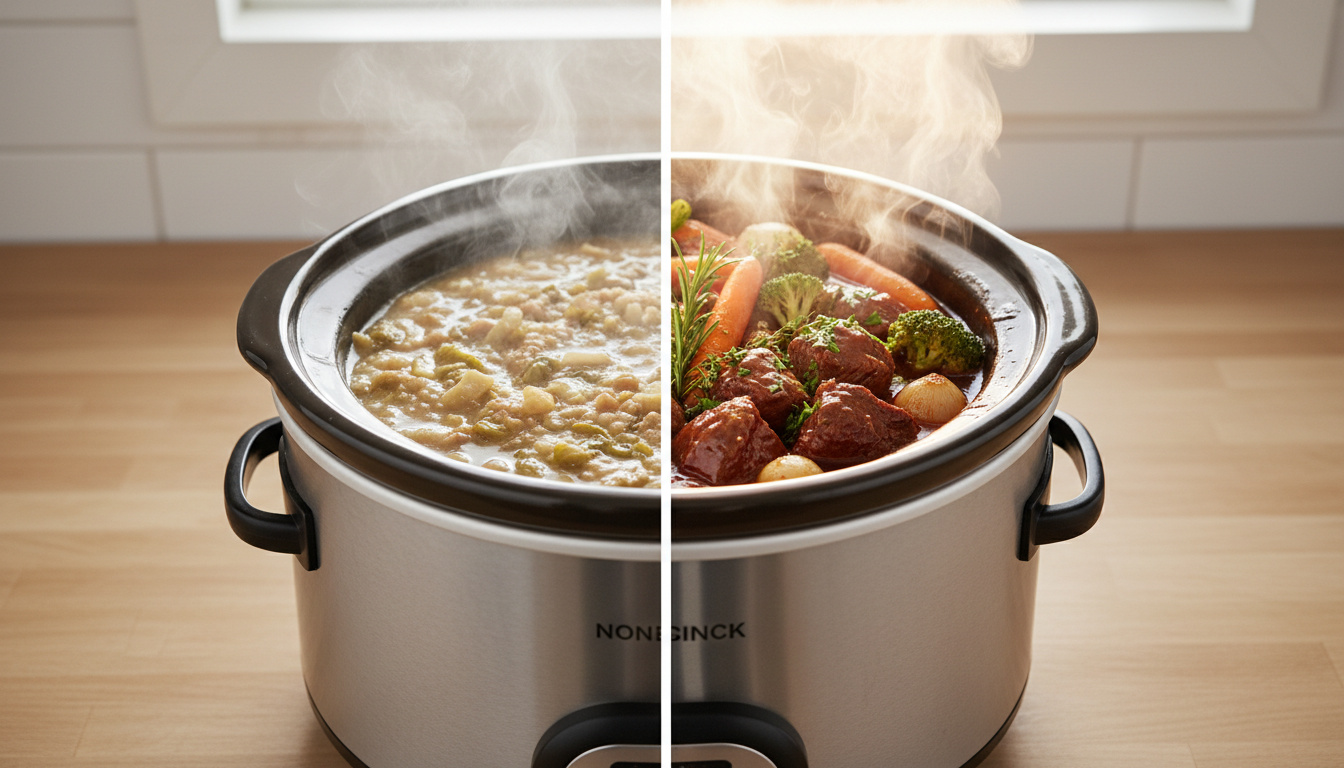

Slow cookers promise effortless, flavorful meals but frequently deliver bland, watery, or mushy disappointments. Understanding why these appliances fail to meet expectations transforms frustrated home cooks into confident chefs. Whether preparing a hearty stew or experimenting with a Dark and Stormy Cocktail Recipe while dinner simmers, mastering these fixes ensures consistent results.
Common issues stem from the appliance’s sealed environment, which prevents evaporation and browning. Excess liquid dilutes flavors, while improper layering destroys texture. Fortunately, targeted adjustments resolve these problems without purchasing new equipment.
What Are the Most Common Slow Cooker Problems?
- Slow cookers retain all moisture, requiring half the liquid of stovetop recipes
- Maillard reaction requires separate searing; slow cookers cannot brown meat
- Root vegetables need longer cooking times than meat or quick-cooking produce
- Frozen meat leaches excess water and risks food safety in the danger zone (40-140°F)
- High heat settings halve cooking time but often produce tough, overcooked proteins
- Lining the lid with paper towels absorbs condensation, concentrating flavors
- Each lid removal adds 20-30 minutes to total cooking time due to heat loss
| Problem | Root Cause | Verified Fix |
|---|---|---|
| Bland taste | No evaporation/dilution | Sear meat; reduce liquid by 50% |
| Watery sauce | Sealed environment traps moisture | Cornstarch slurry last 30 min |
| Mushy vegetables | Overexposure to heat | Add broccoli/pasta final 30-60 min |
| Tough meat | High heat or frozen state | Thaw fully; use low setting |
| Oily residue | Unrendered fat | Trim fat before searing |
| Condensation dilution | Dripping lid moisture | Paper towel under lid |
| Overcooked edges | Overfilling blocks circulation | Fill maximum ¾ capacity |
| Spicy bitterness | Heat intensifies capsaicin | Reduce chili/spice amounts |
How to Fix Bland Flavor and Thicken Watery Results?
Rescuing Bland Flavor
Excess liquid remains the primary culprit behind tasteless slow cooker meals. Unlike stovetop cooking where steam escapes, sealed ceramic pots trap every drop of moisture, diluting seasonings and creating soupy textures. Good Housekeeping recommends reducing recipe liquids by half for stews and soups, effectively concentrating flavors as ingredients release their own juices.
The Maillard reaction—that chemical process creating rich, savory flavors and appealing color—cannot occur in moist slow cooker environments. Searing meat in a hot skillet before transferring creates the necessary caramelization. Delish emphasizes that this preliminary browning step adds depth impossible to achieve through slow cooking alone.
Place a paper towel under the slow cooker lid to absorb condensation. This prevents diluted flavors from dripping back into the dish, maintaining intensity throughout the cooking cycle.
Fixing Watery Consistency
Thickening sauces requires strategic timing. Adding cornstarch or flour slurries during the final thirty minutes prevents clumping while achieving desired viscosity. Alternatively, transferring contents to a stovetop pot post-cooking allows controlled reduction through simmering. Video demonstrations confirm these methods effectively combat the inevitable moisture retention inherent to slow cooking technology.
How to Prevent Mushy Vegetables and Tough Meat?
Avoiding Mushy Vegetables
Vegetable texture failures result from uniform cooking times applied to ingredients with vastly different structural densities. Root vegetables—potatoes, carrots, turnips—require extended heat exposure to break down starches and fibers. Good Housekeeping shows these hardy ingredients belong at the bottom of the pot, closest to the heat source, with meat layered above.
Delicate vegetables including broccoli, zucchini, or leafy greens need protection from prolonged exposure. Adding these ingredients during the final thirty to sixty minutes preserves crisp-tender textures without compromising overall dish doneness. Uniform cutting ensures even cooking rates among similar vegetable types.
Tenderizing Tough Meat
Protein toughness emerges from two primary errors: using frozen meat and selecting high heat settings. Frozen cuts release excess water during thawing within the pot, creating boiled rather than braised results while potentially lingering in the food safety danger zone between 40°F and 140°F. Culinary experts unanimously advise complete thawing before cooking begins.
Temperature selection critically affects texture. While high settings reduce cooking duration by half, they risk overcooking and tightening muscle fibers. Low settings provide gradual collagen breakdown, transforming tough cuts into tender results. Overcooking by even four additional hours can reverse tenderization, causing previously soft meat to toughen again.
What Layering and Preparation Mistakes Destroy Slow Cooker Results?
Proper layering sequences determine whether ingredients cook uniformly or deteriorate into unrecognizable mush. Dense root vegetables require direct heat contact and extended time, positioning them at the container’s bottom. Meat sits above these foundations, receiving indirect heat that prevents drying while cooking through. Delicate ingredients—dairy, pasta, tender vegetables—enter only during final phases.
Never place frozen meat directly into a slow cooker. The extended time required to reach safe internal temperatures creates bacterial growth conditions in the danger zone. Always thaw completely in refrigeration before cooking begins.
Fat management significantly impacts final dish quality. Unrendered fat from untrimmed cuts creates oily, unappetizing surface layers. Manufacturer guidelines specifically recommend trimming excess fat before the searing process, eliminating oily residues while retaining enough marbling for moisture.
Filling beyond three-quarters capacity prevents proper liquid circulation and increases boil-over risks. Each lid removal extends cooking time by twenty to thirty minutes due to heat escape—resist the urge to peek.
When Should Each Ingredient Enter the Slow Cooker?
- 0:00 (Start): Root vegetables (potatoes, carrots) placed at bottom; seared meat layered above; aromatics and spices added; liquid reduced by half.
- High heat risk period: First two hours critical for reaching safe temperatures—never use frozen meat during this phase.
- Mid-cook check (if necessary): Quick spice adjustment only—lid removal adds 20-30 minutes.
- Final 60 minutes: Add quick-cooking vegetables (broccoli, peas) and pasta.
- Final 30 minutes: Stir in cornstarch slurry for thickening; add dairy or fresh herbs to prevent curdling/browning.
- Completion: Rest meat 10 minutes before serving; sauce reduction on stovetop if needed.
Proven Fixes vs Common Myths
| Established Facts | Unverified or Misleading Claims |
|---|---|
| Searing before cooking creates flavor through Maillard reaction | “Slow cookers can brown meat adequately on their own” |
| Low setting provides superior tenderness for tough cuts | “High setting always produces faster, equal results” |
| Frozen meat risks food safety and creates watery results | “Frozen meat works fine if cooking time extends” |
| Paper towels under lids absorb condensation effectively | “Lid lifting has minimal impact on cooking time” |
| Thickening requires final 30-minute slurry addition | “Adding flour at start prevents lumps” |
Why Slow Cookers Create These Cooking Challenges
The fundamental design of slow cookers—sealed ceramic vessels with low, consistent heat—necessarily prevents the evaporation that concentrates flavors in conventional cooking. Serious Eats explains that this hermetic environment, while excellent for tenderizing collagen-rich meats through sustained low temperatures, simultaneously traps all released moisture. Without reduction, flavors remain diluted and textures soggy.
Additionally, the maximum temperature ceiling (typically around 200°F on low, 300°F on high) falls below the Maillard reaction threshold of approximately 300°F. This physical limitation makes pre-searing essential for color and flavor development impossible to achieve within the appliance itself. Understanding these constraints explains why certain techniques—layering by density, late addition of tender ingredients, and external thickening—compensate for the device’s inherent limitations rather than indicating user error.
Expert Advice on Slow Cooker Success
Don’t lift the lid often—steam loss adds 20-30 minutes cooking time per peek.
— Good Housekeeping Kitchen Appliance Testing
It is not ‘set it and forget it’—prep like searing and proper layering yields the best results.
— Delish Culinary Team
Reducing your liquid by half is the single most important fix for slow cooker recipes.
— Cooking Demonstration Analysis
Additional technical guidance available via Allrecipes.
Key Takeaways for Perfect Slow Cooker Results
Transforming slow cooker failures into culinary successes requires adjusting for the appliance’s sealed, low-temperature environment. Reduce liquids by half, sear meats beforehand, layer root vegetables beneath proteins, and add delicate ingredients only in final phases. Avoid frozen components and resist frequent lid removal. For complete kitchen wellness while preparing these meals, consider reviewing a Hip Flexor Stretch Guide to maintain comfort during cooking prep.
Frequently Asked Questions
Why does my slow cooker meat taste bland even after hours of cooking?
Excess liquid dilutes flavors in the sealed environment. Sear meat before adding and reduce recipe liquids by half to concentrate taste.
Can I put frozen chicken directly into the slow cooker?
No. Frozen meat risks bacterial growth in the danger zone (40-140°F) and releases excess water. Always thaw completely first.
How do I thicken sauce at the end of slow cooking?
Mix cornstarch with cold water to create a slurry, stir in during the final 30 minutes, or transfer to stovetop for reduction.
When should I add vegetables to prevent mushiness?
Place root vegetables at the bottom at the start. Add quick-cooking vegetables like broccoli or peas only in the final 30-60 minutes.
Does lifting the lid really affect cooking time?
Yes. Each removal releases steam and heat, extending required cooking time by 20-30 minutes per peek.
Should I use high or low heat settings?
Low settings provide better tenderness and flavor development. High halves cooking time but risks overcooking and toughness.

Laura Grant covers business, markets and economic policy for Coast Current.