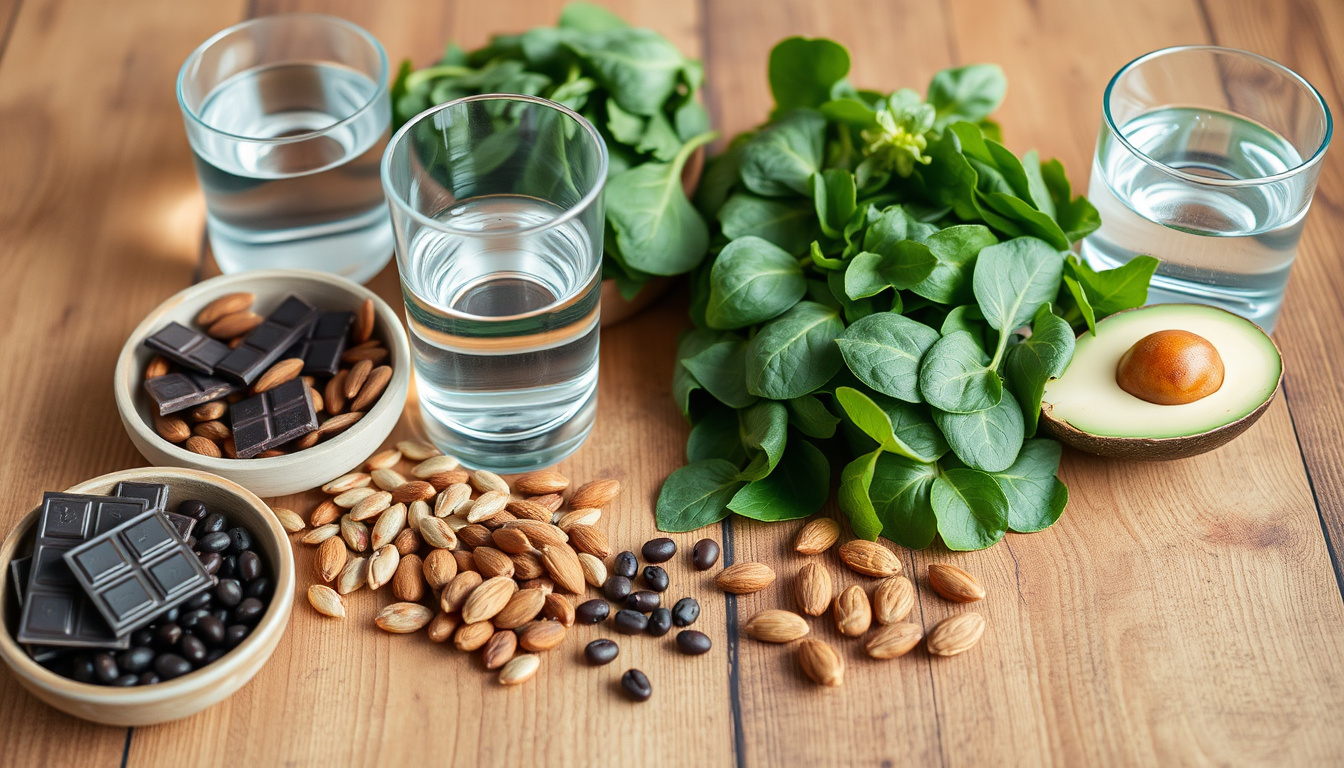

Most people know bananas are a decent source of potassium, but ask someone about magnesium and you’ll often get a blank stare—yet this mineral, which supports more than 300 enzyme reactions, is something many of us aren’t getting enough of, with adult men needing 400–420 mg per day and women 310–320 mg per day. This guide breaks down which foods pack the most magnesium per bite and how to bridge the gap without reaching for a pill.
Daily recommended intake for adults: 400–420 mg (men), 310–320 mg (women) ·
Magnesium in pumpkin seeds (per 1 oz / 28 g): 168 mg ·
Top food source per 100 g: Pumpkin seeds: 535 mg ·
Magnesium in a medium banana: 32 mg
Quick snapshot
- Pumpkin seeds provide 535 mg per 100 g (GoodRx)
- RDA: 400–420 mg (men), 310–320 mg (women) (NIH Office of Dietary Supplements)
- Dark chocolate (70–85% cocoa): ~230 mg per 100 g (PharmEasy)
- Exact bioavailability differences between whole‑food magnesium and supplements (Harvard T.H. Chan School of Public Health – The Nutrition Source)
- Optimal magnesium intake for sleep improvement beyond general RDA (GoodRx)
- NIH RDA values last updated in 2021 remain the standard (NIH Office of Dietary Supplements)
- Combining pumpkin seeds, spinach, and black beans can meet daily needs in one day (Cleveland Clinic)
Here’s a quick summary of key magnesium facts.
| Fact | Value |
|---|---|
| Highest food per 100 g | Pumpkin seeds, 535 mg |
| RDA for adult men | 400–420 mg/day |
| RDA for adult women | 310–320 mg/day |
| Percentage of US adults below RDA | Approximately 45% |
| Banana contribution to DV | 8% of daily value (32 mg) |
What food has the highest magnesium?
Several foods compete for the top spot, but one seed wins by a wide margin. Data from multiple sources converge on the same winner.
Seeds and Nuts
- Pumpkin seeds: 535 mg per 100 g (GoodRx)
- Chia seeds: 335 mg per 100 g (BetterYou)
- Almonds: ~270 mg per 100 g (PharmEasy)
- Cashews: ~260 mg per 100 g (GoodRx)
Pumpkin seeds alone deliver more than the daily RDA for women in a single 100‑gram serving, making them the simplest dietary swap for anyone low on magnesium.
Leafy Greens
- Swiss chard (cooked): 150 mg per cup (Cleveland Clinic)
- Spinach (cooked): 87 mg per cup (GoodRx)
- Kale (cooked): 30 mg per cup (Harvard T.H. Chan School of Public Health – The Nutrition Source)
Legumes
- Black beans: 120 mg per cup cooked (PharmEasy)
- Edamame: ~100 mg per cup (GoodRx)
- Lentils: 70 mg per cup (BetterYou)
Dark Chocolate
- 70–85% cocoa: ~230 mg per 100 g (PharmEasy)
- 1 oz (28 g) serving: 64 mg (GoodRx)
Fruits
- Avocado: 58 mg per cup (PharmEasy)
- Figs (dried): 50 mg per cup (GoodRx)
- Banana: 32 mg per medium (GoodRx)
How to get 100% magnesium daily?
Meeting the RDA doesn’t require a supplement if you plan your plate strategically.
Recommended Daily Allowance (RDA)
- Men 19–51+: 400–420 mg/day (NIH Office of Dietary Supplements)
- Women 19–51+: 310–320 mg/day (NIH Office of Dietary Supplements)
Sample menu to reach 100% DV
- Breakfast: 1 cup cooked spinach (87 mg) + 1 oz pumpkin seeds (168 mg)
- Lunch: 1 cup black beans (120 mg) + 1 oz almonds (80 mg)
- Snack: 1 medium banana (32 mg) + 1 oz dark chocolate (64 mg)
- Total: ~551 mg – exceeds RDA for both men and women (Cleveland Clinic)
Role of supplements
Magnesium supplements are effective, but whole foods provide additional fiber, vitamins, and antioxidants that isolated supplements lack.
Harvard T.H. Chan School of Public Health – The Nutrition Source
Relying on supplements alone means missing the synergistic benefits of the food matrix, which can improve overall nutrient absorption.
The implication: Whole foods should be the primary strategy, with supplements used only when dietary intake is insufficient.
What are signs of magnesium deficiency?
Early symptoms are easy to dismiss, but they can signal a deeper shortfall.
Common symptoms
- Fatigue and weakness (NIH Office of Dietary Supplements)
- Muscle cramps and spasms (Cleveland Clinic)
- Loss of appetite (NIH Office of Dietary Supplements)
- Mental fog or irritability (Harvard T.H. Chan School of Public Health – The Nutrition Source)
Who is at risk?
- People with gastrointestinal disorders (e.g., Crohn’s, celiac) (NIH Office of Dietary Supplements)
- Type 2 diabetes patients (NIH Office of Dietary Supplements)
- Older adults, especially those with reduced appetite (Harvard T.H. Chan School of Public Health – The Nutrition Source)
- Individuals on proton‑pump inhibitors or diuretics (NIH Office of Dietary Supplements)
Treatment and prevention
Increasing intake of magnesium‑rich foods is the first line. For confirmed deficiency, doctors may recommend supplements, but food sources are safer for long‑term maintenance.
High‑dose supplements (above 350 mg per day from non‑food sources) can cause diarrhea and cramping, as noted by the Harvard T.H. Chan School of Public Health – The Nutrition Source.
The pattern: Early intervention through diet can prevent the progression to chronic deficiency.
How can I raise my magnesium level quickly?
If you need a rapid boost, certain foods and drinks deliver magnesium in a form the body can use fast.
Drinks high in magnesium
- Tamarind juice: 89 mg per cup (PharmEasy)
- Almond milk (fortified): 45–60 mg per cup (GoodRx)
- Coconut water: 15 mg per cup (GoodRx)
Fast-absorbing foods
- Pumpkin seeds (168 mg/oz)
- Almonds (80 mg/oz)
- Dark chocolate (64 mg/oz)
These foods are dense and require little digestion, making them effective for a quick bump (Cleveland Clinic).
Magnesium supplements
- Magnesium citrate and glycinate are most bioavailable (Harvard T.H. Chan School of Public Health – The Nutrition Source)
- Avoid exceeding 350 mg supplemental dose per day
Supplements raise levels quickly but bypass the food matrix; for sustained improvement, whole foods are superior.
What this means: For a quick fix, supplements work, but for long-term health, whole foods remain the better choice.
Is 1 banana a day enough magnesium?
A single banana provides only about 8% of your daily magnesium needs. It’s a useful contributor, but far from sufficient.
Magnesium content of a banana
- Medium banana (118 g): 32 mg (GoodRx)
- Large banana (136 g): ~37 mg (PharmEasy)
Other fruits with more magnesium
- Avocado: 58 mg per cup (PharmEasy)
- Figs (dried): 50 mg per cup (GoodRx)
- Dates: 54 mg per cup (GoodRx)
Bananas as a potassium source
Bananas excel at providing potassium (422 mg per medium banana), which works with magnesium for muscle and heart function. But for magnesium alone, they rank low.
Six foods, one pattern: the richest sources are seeds and nuts, followed by dark chocolate and leafy greens, while fruits and grains play supporting roles.
| Food | Mg per 100 g | Mg per typical serving | Serving size |
|---|---|---|---|
| Pumpkin seeds | 535 mg | 168 mg | 1 oz (28 g) |
| Chia seeds | 335 mg | 111 mg | 1 oz (28 g) |
| Almonds | 270 mg | 80 mg | 1 oz (28 g) |
| Dark chocolate (70–85%) | 230 mg | 64 mg | 1 oz (28 g) |
| Swiss chard (cooked) | 150 mg/cup | 150 mg | 1 cup |
| Black beans (cooked) | 120 mg/cup | 120 mg | 1 cup |
GoodRx, BetterYou, PharmEasy
Clarity check
Confirmed facts
- Pumpkin seeds are the richest food source per 100 g
- Magnesium deficiency symptoms include muscle cramps, fatigue, and mental fog
- RDA numbers from NIH ODS are established
- Dark chocolate (70–85% cocoa) provides ~230 mg/100 g
What’s unclear
- Exact bioavailability differences among whole foods vs. supplements
- Optimal magnesium intake for sleep improvement beyond general RDA
Expert quotes on magnesium
Magnesium is essential for more than 300 enzyme reactions, including those that build proteins and strong bones and regulate blood sugar, blood pressure, and muscle and nerve function.
NIH Office of Dietary Supplements
Magnesium acts as an electrical conductor that helps muscles contract and the heart beat steadily.
Harvard T.H. Chan School of Public Health – The Nutrition Source
Foods like pumpkin seeds, almonds, and spinach are among the best ways to increase magnesium intake naturally.
Cleveland Clinic
For anyone relying on a banana as their main magnesium source, the math simply doesn’t add up. The Missouri Department of Mental Health often points out that a single banana provides only 32 mg of magnesium, which is less than 10% of the daily requirement for an adult. That’s like trying to fill a bathtub with a teaspoon. To truly meet your daily goal, you need a combination of seeds, leafy greens, and legumes.
Frequently asked questions
Can you get too much magnesium from food?
It’s very difficult because the kidneys excrete excess magnesium from food. The UL (350 mg/day) applies only to supplements. (NIH Office of Dietary Supplements)
What is the best form of magnesium supplement?
Magnesium citrate and glycinate are generally considered most bioavailable. Avoid magnesium oxide if you want high absorption. (Harvard T.H. Chan School of Public Health – The Nutrition Source)
Are magnesium-rich foods good for anxiety?
Some studies suggest magnesium may help regulate the stress response, but evidence is mixed. Whole food sources are better than supplements for long-term support. (NIH Office of Dietary Supplements)
How does magnesium affect sleep quality?
Magnesium plays a role in GABA signaling and melatonin production. Some people report better sleep after increasing magnesium intake, especially from foods like almonds and pumpkin seeds. (Cleveland Clinic)
What foods block magnesium absorption?
High doses of dietary fiber, phytates (in whole grains and legumes), and oxalates (in spinach) can reduce absorption, but effects are minimal when eaten as part of a balanced diet. (Harvard T.H. Chan School of Public Health – The Nutrition Source)
Do cooking methods affect magnesium content?
Boiling can cause magnesium to leach into water. Steaming or roasting preserves more magnesium. (GoodRx)
Is magnesium better absorbed as a citrate or glycinate?
Both are well absorbed. Glycinate is often recommended for sleep and anxiety, citrate for general supplementation. (Harvard T.H. Chan School of Public Health – The Nutrition Source)
Can magnesium help with muscle cramps?
Yes, magnesium is involved in muscle relaxation. Many athletes use magnesium-rich foods or supplements to reduce cramps. (NIH Office of Dietary Supplements)
If you’ve been relying on a banana and a multivitamin, it’s time to rethink your approach. For the average adult, the choice is clear: either start incorporating pumpkin seeds, spinach, and black beans into your daily meals, or risk remaining in the 45% of Americans who fall short of their magnesium needs. Small dietary shifts today can prevent the fatigue and cramps that signal a deeper deficiency tomorrow.
Related reading: Low Iron Symptoms – Signs, Stages and Treatments · What Is Normal Blood Pressure? Chart by Age & Readings

Priya Mitchell leads fact-checking, source verification and corrections at Coast Current.