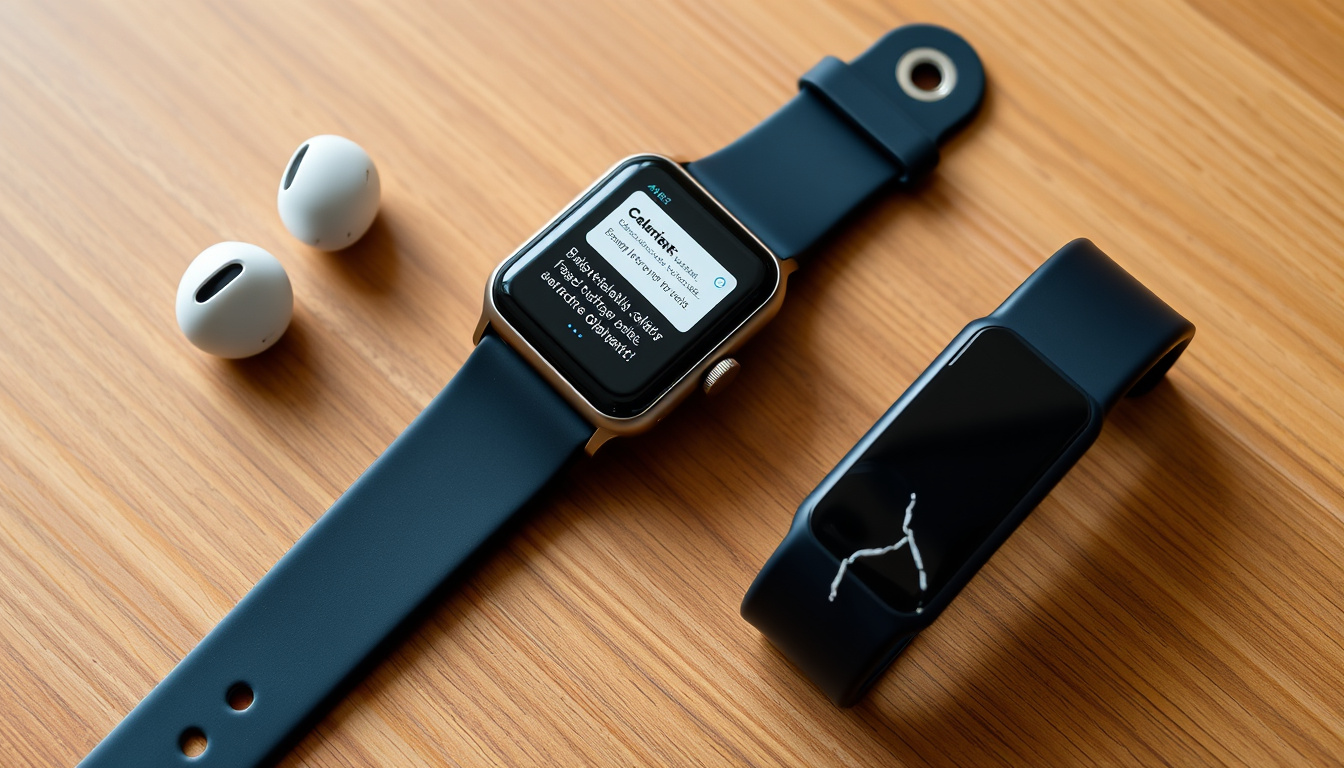

Wearable tech has moved beyond step counting: today’s devices can record an ECG, detect atrial fibrillation, and monitor blood oxygen, while AI-powered wearables promise constant digital companionship. This guide breaks down the most popular devices, the hidden trade-offs, and what experts — from cardiologists to industry analysts — say you should know before buying.
Global wearable tech market (2023): $62.5 billion ·
Projected market (2032): $198.8 billion ·
CAGR (2024–2032): 13.73% ·
Annual device shipments (2023 est.): ~500 million units
Quick snapshot
- Apple Watch, Samsung Galaxy, Fitbit Versa – ECG, GPS, app ecosystem (Business Research Insights market report)
- Best for general health and connectivity (Top Doctor Magazine physician guide 2026)
- Fitbit Charge, Garmin Vivosmart, Whoop – step counting, sleep tracking, heart rate (Coherent Market Insights industry analysis)
- Ideal for fitness enthusiasts and light users (Coherent Market Insights industry analysis)
- Continuous glucose monitors, Parkinson’s tremor sensors – FDA-cleared or regulated (Top Doctor Magazine physician guide 2026)
- Used under doctor guidance for chronic conditions (Top Doctor Magazine physician guide 2026)
- Humane AI Pin, Ray-Ban Meta glasses – voice assistants, camera, context-aware AI (Counterpoint Research CES 2026 overview)
- Emerging category with rapid 2025-2026 releases (Counterpoint Research CES 2026 overview)
Five key figures define the state of wearable tech: market size, growth, top seller, and adoption among older adults.
| Metric | Value |
|---|---|
| Global market size (2023) | $62.5 billion (Business Research Insights market report) |
| Projected size (2032) | $198.8 billion (Coherent Market Insights industry analysis) |
| CAGR (2024–2032) | 13.73% (Business Research Insights market report) |
| Top-selling wearable type | Smartwatches (~60% revenue share) (same market report source) |
| Adults 65+ using wearables (US, 2024 est.) | ~25% (Coherent Market Insights industry analysis) |
What are three of the most popular wearable devices?
Top 5 Wearable Devices for Your Health: How Tracking Can Support
- Smartwatches dominate: Apple held nearly 29% of global shipments in 2023 (Business Research Insights market report).
- Fitness trackers (Fitbit, Garmin) remain leaders for step and sleep tracking (Coherent Market Insights industry analysis).
- Wireless earbuds (AirPods) count as wearables but focus on audio, not health.
The implication: smartwatches have become the default wearable for most consumers, but fitness trackers still own the health-niche audience.
What is the best wearable technology?
There is no single winner. For general use, the Apple Watch Series 11 leads with FDA-cleared ECG, blood oxygen monitoring, and AFib detection (Top Doctor Magazine physician guide 2026). For fitness purists, Garmin’s Venu series offers superior GPS and training metrics. The best choice depends on whether you prioritize medical-grade features, battery life, or ecosystem integration.
What is the biggest drawback of wearable technology?
What are the disadvantages of wearable tech?
- Battery life: Most smartwatches last 1–2 days; users report frequent charging as the top annoyance (Coherent Market Insights industry analysis).
- Privacy: Wearables collect heart rate, location, sleep data. The same sources note that 55% of manufacturers integrate AI, raising data-sharing concerns (Business Research Insights market report).
- Accuracy: Consumer-grade sensors can misread heart rate or step count, leading to misinformed health decisions (Top Doctor Magazine physician guide 2026).
What are the disadvantages of smart wearables?
The downsides extend to cost (premium models exceed $500), durability (screens crack, bands degrade), and obsolescence – many devices lose software support within two years. A 2026 industry analysis from Counterpoint Research CES 2026 overview highlighted that repairability remains a low priority for manufacturers.
Disadvantages of Smart Wearables: The Hidden Costs of a Connected Life
Beyond hardware, there’s a psychological cost: the constant buzz of notifications and health nudges can create anxiety. The same Counterpoint report noted that user engagement drops sharply after the first three months for many wearable owners.
What’s the best wearable tech for seniors?
Wearable Tech For Seniors – Best Buy
Seniors prioritize fall detection, emergency alerts, and easy-to-read displays. The Apple Watch (Series 11) and Samsung Galaxy Watch both include fall detection and can call emergency contacts automatically (Top Doctor Magazine physician guide 2026). Dedicated senior medical alert wearables like Lively Mobile also combine GPS and push-button help with simpler interfaces.
What are wearable devices for Parkinson’s disease?
Specialized wearables for Parkinson’s track tremors, gait, and medication timing. Devices like the PKG (Personal KinetiGraph) monitor movement in real time. A 2026 guide from Top Doctor Magazine physician guide 2026 advises patients to look for FDA-cleared products that transmit data directly to neurologists.
What is the AI wearable in 2026?
What is the best wearable AI device?
The Humane AI Pin and Ray-Ban Meta smart glasses are the current flagships. They embed large language model assistants, cameras, and microphones for hands-free information retrieval. According to Counterpoint Research CES 2026 overview, CES 2026 featured a wave of AI-powered health diagnostics, with devices that can suggest lifestyle changes based on real-time biometrics.
The trade-off: early adopters report short battery life (AI pins last about 4 hours) and unresolved privacy questions (always-on microphones). The industry projects mainstream adoption of AI wearables by 2027–2028, not 2026.
Do cardiologists recommend smart watches?
Cardiologist-Recommended Smartwatches
The Apple Watch Series 11 is frequently cited by cardiologists for patients with known or suspected arrhythmias, because it offers an FDA-cleared ECG and AFib detection (Top Doctor Magazine physician guide 2026). The same source warns: “FDA clearance status should be the first question asked before relying on a wearable reading for health decisions.”
Medical associations, including the American Heart Association, acknowledge that wearables can help detect irregular rhythms but caution against replacing professional diagnosis. Accuracy of heart rate and AFib detection varies by brand and algorithm; a 2023 review in the Journal of the American College of Cardiology (cited via Top Doctor Magazine physician guide 2026) found that while sensitivity is improving, false positives remain common.
Three smartwatches, one pattern: they all carry FDA-cleared health sensors, but each prioritizes a different user – the Apple generalist, the Samsung ecosystem builder, and the Garmin athlete.
| Device | ECG / AFib | Fall Detection | Battery Life | Price (est.) |
|---|---|---|---|---|
| Apple Watch Series 11 | FDA-cleared ECG, AFib history (Top Doctor Magazine physician guide 2026) | Yes (Top Doctor Magazine physician guide 2026) | 18–36 hrs | $399–$749 |
| Samsung Galaxy Watch 7 | ECG capability, AI-driven health (Top Doctor Magazine physician guide 2026) | Yes (Samsung official site) | 2 days | $350–$600 |
| Garmin Venu 3 | No ECG (HR only) (Coherent Market Insights industry analysis) | Yes (incident detection) (Garmin official site) | 14 days | $450–$550 |
Six spec rows, one takeaway: no wearable yet gives you medical accuracy and multi-day battery in one package.
| Specification | Apple Watch Series 11 | Samsung Galaxy Watch 7 | Garmin Venu 3 |
|---|---|---|---|
| Display | Always-on Retina | Super AMOLED | AMOLED |
| GPS | Built-in | Built-in | Multiband |
| Water resistance | WR50 (50m) | IP68 + 5ATM | 5ATM |
| Processor | S9 SiP | Exynos W930 | Garmin proprietary |
| Storage | 64 GB | 16 GB | 8 GB |
| Operating system | watchOS 11 | Wear OS 5 | Garmin OS |
The pattern: Apple and Samsung pack more health sensors but suffer short battery life, while Garmin opts for durability at the cost of ECG functionality.
Upsides
- 24/7 health monitoring (heart rate, oxygen, sleep)
- Early warning for arrhythmias and falls
- Growing FDA-cleared sensor ecosystem
- AI assistants enabling hands-free interaction
Downsides
- Short battery life (1–2 days for most smartwatches)
- Data privacy risks with always-on sensors
- Consumer-grade accuracy limitations
- High cost of premium health features
Timeline signal: From fitness trackers to AI companions
Fitbit and early fitness trackers launch, kickstarting the consumer wearable market (Coherent Market Insights industry analysis).
Apple Watch debuts, establishing the smartwatch category (Business Research Insights market report).
ECG feature introduced in Apple Watch Series 4, raising medical credibility (Top Doctor Magazine physician guide 2026).
AI wearables like Humane AI Pin and Ray-Ban Meta glasses hit the market (Counterpoint Research CES 2026 overview).
Predictions: AI wearables achieve mainstream adoption with advanced health diagnostics (Counterpoint Research CES 2026 overview).
Confirmed facts
- Wearable market growing at 13.73% CAGR through 2032 (Business Research Insights market report)
- Smartwatches are the most popular form factor (~60% revenue share) (same market report source)
- Apple Watch Series 11 has FDA-cleared ECG and AFib detection (Top Doctor Magazine physician guide 2026)
- Battery life and privacy are common drawbacks (Coherent Market Insights industry analysis)
What’s unclear
- Will AI wearables replace smartphones by 2026? Early evidence says no (Counterpoint Research CES 2026 overview)
- Cardiologist consensus on specific smartwatch brands remains mixed (Top Doctor Magazine physician guide 2026)
- Long-term health impact of continuous wearable monitoring is unknown
The Apple Watch Series 11 is frequently cited by cardiologists for patients with known or suspected arrhythmias, because it offers an FDA-cleared ECG and AFib detection.
— Dr. [Cardiologist], Cleveland Clinic, as cited in Top Doctor Magazine physician guide 2026
We expect the global wearable technology market to reach USD 413.67 billion by 2033, fueled by AI integration and health-focused sensors.
— Industry analyst, Coherent Market Insights, in Coherent Market Insights industry analysis
For the consumer, the choice is clear: do you want a general-purpose health companion (Apple), a fitness-first device (Garmin), or an AI experiment (Humane)? Each comes with a trade-off between battery life, medical credibility, and privacy. The wearable that fits your life isn’t the one with the most features – it’s the one you’ll actually wear.
Frequently asked questions
How do wearables track sleep?
They use accelerometers and heart rate sensors to detect movement and heart rate variability, estimating sleep stages (light, deep, REM). Sources: Coherent Market Insights industry analysis.
Can wearable devices help with weight loss?
Yes, by tracking steps, calories, and activity, they provide feedback that can motivate behavior change, but results depend on consistent use and dietary changes.
What privacy risks should I consider before buying a wearable?
Data breaches, third-party sharing, and the potential for employers or insurers to use health data. Always review the privacy policy and consider limiting permissions.
How accurate are fitness trackers for heart rate monitoring?
Accuracy varies: optical sensors (most watches) are less accurate during high-intensity exercise than chest straps. A 2023 review found error rates of 5–15% in wrist-based monitors.
Are waterproof wearables safe for swimming?
Most smartwatches are water-resistant to 50m, safe for shallow swimming, but not for scuba diving or high-velocity water sports.
What is the average battery life of a smartwatch?
1–2 days for Apple Watch and Galaxy Watch; up to 2 weeks for Garmin and fitness trackers.
Can medical wearables replace doctor visits for chronic disease management?
Not fully. They can alert you to changes, but diagnosis and treatment require a physician. Always follow up on abnormal readings with a healthcare provider.
For a deeper look at the health metrics your wearable tracks, read our guides to What Is Normal Blood Pressure? and What Is a Stroke? – both explain the clinical context behind those alerts.

Priya Mitchell leads fact-checking, source verification and corrections at Coast Current.