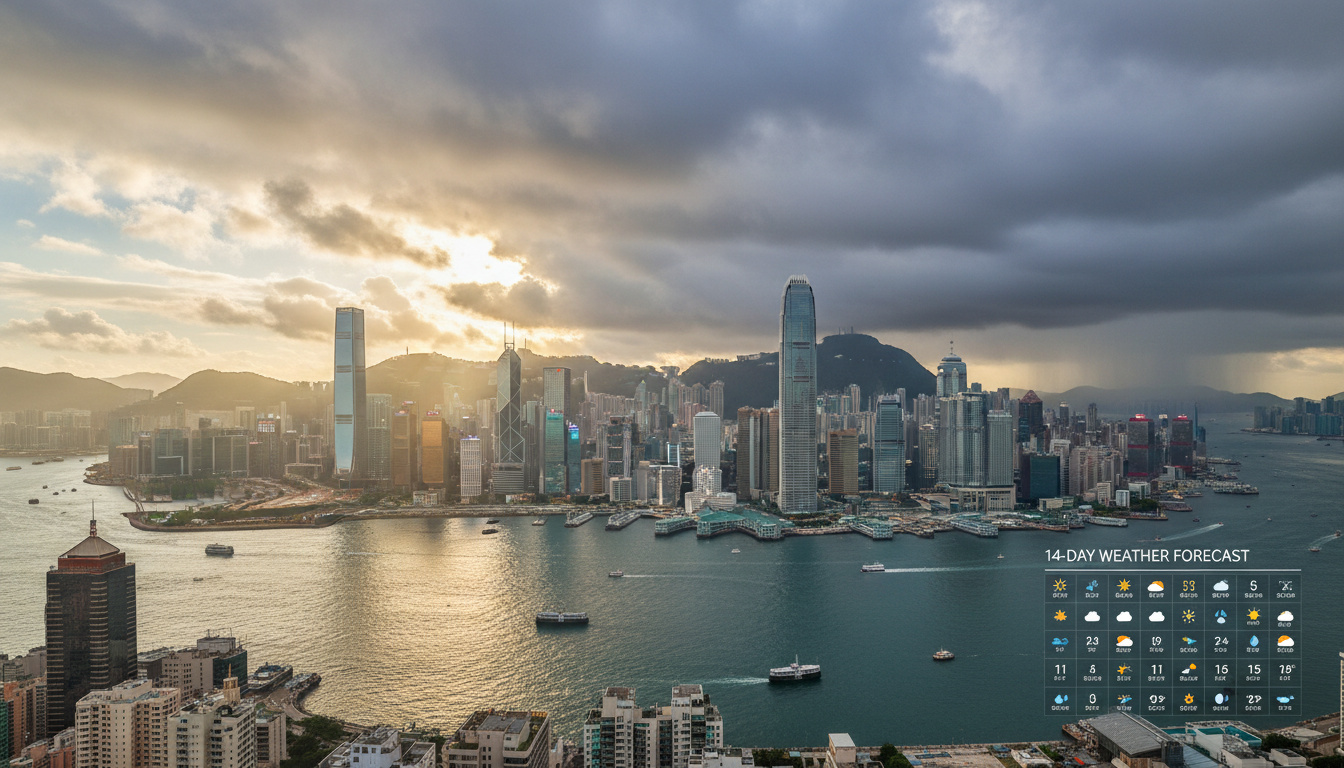

Hong Kong currently registers 75°F (24°C) under overcast skies, with humidity climbing to 89% and a dew point of 70-72°F creating distinctly muggy conditions. Light winds drift from the north and southwest at 2-7 mph, occasionally gusting to 19 mph, while the overnight rain probability remains low at 7-30%.
The subtropical territory maintains consistent warmth year-round, though April opens a transitional window where afternoon thunderstorms begin replacing winter dry spells. Sunrise occurred at approximately 6:17 AM, with sunset expected at 6:38 PM, delivering roughly 12 hours of daylight punctuated by moderate UV levels indexed at 4.
Real-time observations from multiple meteorological services indicate the mercury feels closer to 79°F when humidity factors apply, a common discrepancy in Hong Kong’s coastal climate where moisture trapped between dense urban architecture and Victoria Harbour amplifies perceived temperatures.
What is the Current Weather in Hong Kong?
Meteorological stations across the Hong Kong Special Administrative Region report stable thermal conditions with minimal diurnal variation today. The Hong Kong Observatory maintains official records showing relative humidity consistently above 85%, while independent monitoring services confirm wind patterns remain gentle with directional shifts between northerly and southwesterly flows.
Current Temperature
75°F (24°C)
RealFeel® 79°F
Today’s Range
79°F / 71°F
High / Low
Rain Probability
55%
Afternoon t-storm
Wind Conditions
2-7 mph
Gusts to 19 mph
- Subtropical climate: Warm temperatures persist year-round with minimal seasonal variance in monthly means.
- High humidity baseline: Consistently 86-89%, creating persistent muggy conditions even at moderate temperatures.
- Overcast dominance: Current cloud cover blocks direct solar radiation despite moderate UV index readings.
- Low overnight precipitation: Early morning rain chance remains minimal at 7-30% before rising significantly afternoon.
- Urban wind tunneling: Gusts reaching 19 mph compensate for generally light 2-7 mph sustained winds.
- Dew point discomfort: 70-72°F dew point indicates saturated air masses typical of approaching monsoon transitions.
| Condition | Current Reading | Observatory |
|---|---|---|
| Temperature | 75°F (24°C) | WeatherBug, AccuWeather |
| Feels Like | 79°F | AccuWeather |
| Relative Humidity | 86-89% | WeatherBug |
| Wind Direction/Speed | N/SW at 2-7 mph | WeatherBug |
| Wind Gusts | Up to 19 mph | WeatherBug |
| Rain Probability | 7-30% (overnight) | WeatherBug |
| Dew Point | 70-72°F | Multi-source |
| UV Index | 4 (Moderate) | AccuWeather |
| Sunrise | 6:17-6:18 AM | AccuWeather |
| Sunset | 6:38 PM | AccuWeather |
Hong Kong 14-Day Weather Forecast
The forecast trajectory indicates escalating precipitation probabilities through the first week of April, with thunderstorm risks peaking between April 3-5 before moderating. Temperatures fluctuate between the high 60s and upper 80s Fahrenheit, reflecting the region’s characteristic thermal stability despite significant weather pattern interruptions.
AccuWeather projects a 55% chance of afternoon thunderstorms today, escalating to 70% Thursday morning and reaching 90% by Friday. The Hong Kong Observatory provides official nine-day forecasts incorporating pressure systems and tropical cyclone track probability charts for extended outlooks.
Predictions remain highly reliable for 48-72 hour windows, though precipitation timing and intensity grow increasingly variable beyond day five due to complex interactions between maritime air masses and the South China Sea thermal low.
Week One Outlook
Wednesday through Sunday presents the most active precipitation window, with cumulative rainfall potentially exceeding seasonal averages. Thursday’s morning showers give way to more concentrated evening thunderstorm activity Friday, while Saturday brings heavy morning precipitation with sustained humidity above 80%.
| Date | High/Low (°F) | Conditions | Precipitation |
|---|---|---|---|
| Apr 1 (Wed) | 79/71 | Afternoon t-storm | 55% |
| Apr 2 (Thu) | 77/72 | A.M. showers | 70% |
| Apr 3 (Fri) | 83/73 | Morning showers, evening t-storms | 90% |
| Apr 4 (Sat) | 77/69 | Heavy morning showers | 84% |
| Apr 5 (Sun) | 80/72 | Afternoon downpours | 91% |
| Apr 6 (Mon) | 78/69 | Morning rain | 85% |
| Apr 7 (Tue) | 89/78 | Stray t-storm, warm | 55% |
Week Two Trends
The second week of April shows thermal rebound with temperatures climbing toward 89°F by Tuesday, accompanied by reduced but persistent shower probabilities around 55%. WeatherBug data suggests mostly cloudy conditions persisting through April 2 with slight rain chances around 25%, while Windy radar indicates considerable cloudiness with occasional showers extending through the maritime corridor.
Average Weather and Temperatures in Hong Kong by Month
Historical climatological data spanning 1991-2020 reveals Hong Kong’s mean annual temperature hovers at 23.3°C (74°F), with total precipitation averaging 2,400mm annually. The subtropical climate delivers distinct seasonal wet and dry cycles despite relatively stable thermal baselines.
How Hot Does It Get in Hong Kong?
Peak thermal stress occurs July through August, when mean temperatures reach 29°C (84°F) and maximum readings consistently hit 31°C (88°F). Overnight lows during this period rarely dip below 27°C (81°F), creating oppressive conditions exacerbated by 380mm monthly rainfall concentrations. January represents the thermal nadir with mean temperatures around 16°C (61°F), maximums near 19°C (66°F), and minimums at 14°C (57°F).
The combination of high humidity and temperatures above 27°C creates heat index values significantly higher than ambient readings, necessitating precautions against heat stress during July and August afternoons.
What is the Humidity Like in Hong Kong?
Relative humidity remains chronically elevated throughout the calendar year, currently registering 86-89% with projections showing 89% tonight moderating to 60% tomorrow before rebounding. This persistent moisture content means RealFeel® temperatures typically exceed actual mercury readings by 3-4 degrees, particularly overnight when evaporative cooling remains suppressed.
| Month | Mean Temp (°C/°F) | Max Temp (°C/°F) | Min Temp (°C/°F) | Rainfall (mm) |
|---|---|---|---|---|
| January | 16°C / 61°F | 19°C / 66°F | 14°C / 57°F | 25 |
| April | 23°C / 73°F | 25°C / 77°F | 21°C / 70°F | 160 |
| July | 29°C / 84°F | 31°C / 88°F | 27°C / 81°F | 380 |
| October | 25°C / 77°F | 28°C / 82°F | 22°C / 72°F | 120 |
| December | 18°C / 64°F | 21°C / 70°F | 15°C / 59°F | 30 |
Best Time to Visit Hong Kong and Typhoon Season
Optimal travel windows fall between October and December or March through April, when temperatures moderate between 20-25°C (68-77°F) and precipitation risks diminish significantly compared to the monsoon-driven summer months. These shoulder seasons avoid both the extreme humidity of June through August and the typhoon threats that characterize the western Pacific cyclone season.
Pounds to AUD – Today’s Rate, History and Forecast provides additional context for travelers monitoring currency fluctuations alongside weather patterns when planning Hong Kong itineraries.
When is Typhoon Season in Hong Kong?
The official tropical cyclone season extends from May through November, with peak activity concentrated July through September. The Hong Kong Observatory maintains vigilant tracking protocols during this period, issuing warning signals when systems approach within 800 kilometers of the territory. Current April forecasts indicate elevated shower and thunderstorm risks ranging 55-91% through early next week, though these derive from frontal systems rather than tropical cyclone activity.
Does It Rain A Lot in Hong Kong?
Precipitation follows highly uneven monthly distributions, with winter months receiving minimal rainfall (January averages 25mm) compared to summer deluges (July reaches 380mm). Annual totals approximate 2,400mm, placing the region among Asia’s wetter coastal cities despite extended dry periods during boreal winter. Weather Underground historical data confirms rainfall frequency increases dramatically when the East Asian Monsoon establishes dominance May through September.
April 3-5 forecasts indicate precipitation chances approaching 90%, with April 5 specifically projecting 91% probability of afternoon downpours. Travelers should anticipate localized flooding in low-lying districts during these peak rain events.
What is the Forecast Timeline for Hong Kong Weather?
-
Initial thunderstorm development possible afternoon with 55% precipitation probability and highs reaching 79°F.
-
Morning shower activity increases to 70% likelihood as northerly winds shift, maintaining humid conditions with highs of 77°F.
-
Peak precipitation period begins with 90% rain chance, morning showers transitioning to evening thunderstorms.
-
Heavy morning showers dominate with 84% probability, temperatures dipping to 77°F/69°F.
-
Maximum rainfall risk at 91%, afternoon downpours likely with sustained tropical humidity.
-
Thermal rebound phase with temperatures climbing toward 89°F and reduced but persistent 55% shower chances.
-
Transition into official typhoon season with elevated tropical cyclone tracking protocols.
What is Certain vs Uncertain in Hong Kong Weather Forecasting?
Established Conditions
- Current temperature readings of 75°F with 86-89% humidity from verified meteorological stations
- Historical climate normals based on 1991-2020 HKO data showing 23.3°C annual means
- Typhoon season duration from May through November with documented peak activity July-September
- UV index of 4 and specific sunrise/sunset times for early April
- Radar-confirmed absence of nearby lightning activity (closest strike 575 miles distant)
Variable Elements
- Precise initiation times for afternoon thunderstorms beyond 48-hour windows
- Specific rainfall accumulation totals during heavy shower events
- Tropical cyclone track predictions prior to system formation in the South China Sea
- Localized wind gust variations within urban street canyons
- Air quality fluctuations related to PM2.5 transport from mainland industrial regions
What Influences Hong Kong’s Weather Patterns?
Hong Kong’s climate emerges from complex interactions between the East Asian Monsoon system, the South China Sea thermal reservoir, and significant urban heat island effects generated by dense high-rise development along the northern shore of Victoria Harbour. The subtropical positioning at 22.3°N latitude ensures minimal seasonal photoperiod variation while exposing the territory to both continental northerly surges during winter and maritime southeasterly flows during summer.
The urban heat island elevates nighttime temperatures in Central and Kowloon districts compared to the New Territories, while the surrounding topography of steep granitic hills channels wind flows and creates localized microclimates. Tasmania Wind Warning – No Active Alerts Across State demonstrates similar topographical influences on wind patterns in other coastal jurisdictions, though Hong Kong’s subtropical moisture sources create distinct precipitation regimes.
Monsoon transitions occurring April and October bring the most unstable atmospheric conditions, as competing air masses generate the thunderstorms evident in current forecasts. The territory receives approximately 2,400mm of rainfall annually, with 80% concentrated May through September when the maritime southwest monsoon dominates.
Where Does Hong Kong Weather Data Come From?
Primary meteorological authority resides with the Hong Kong Observatory, the government department operating since 1883 and maintaining the King’s Park Meteorological Station as its headquarters. HKO provides official real-time radar imagery, automated regional weather stations reporting temperature, humidity, rainfall, visibility, atmospheric pressure, and wind vectors across the territory.
Supplementary data flows from international services including WeatherBug and AccuWeather, which deploy proprietary algorithms to generate 14-day forecasts and RealFeel® indices accounting for humidity and wind. Windy offers visualization of 50+ atmospheric layers including radar and satellite composites for Central Hong Kong coordinates.
The Hong Kong Observatory maintains vigilant tracking protocols for tropical cyclones, issuing warning signals when systems approach within 800 kilometers of the territory.
— Hong Kong Observatory Operational Procedures
What Should Visitors Know About Hong Kong Weather?
Travelers should prepare for immediate humidity exposure upon arrival, with lightweight breathable fabrics essential regardless of visit timing. The current April window offers moderate thermal comfort but requires rain contingencies given 55-91% precipitation probabilities through early next week. Waterproof footwear and compact umbrellas prove necessary even during “dry” seasons, while October through December delivers optimal conditions combining mild temperatures and reduced typhoon risks. Official HKO forecasts provide authoritative guidance superior to international apps for local warning signals and severe weather protocols.
Frequently Asked Questions About Hong Kong Weather
What is Hong Kong’s weather radar?
The Hong Kong Observatory operates an official real-time radar network accessible via their homepage, displaying precipitation intensity across the territory. Windy app provides supplementary radar visualization with 50+ atmospheric layers for Central Hong Kong.
How hot does it get in Hong Kong?
Peak summer temperatures in July and August reach 31°C (88°F) maximums with overnight lows around 27°C (81°F), though humidity often pushes RealFeel® values higher.
Is Hong Kong safe during typhoons?
The Hong Kong Observatory issues graduated warning signals (T1 through T10) providing advance notice of tropical cyclone approaches. Infrastructure accommodates most storm events, though outdoor activities require cessation during T8 or higher signals.
What should I pack for Hong Kong weather?
Lightweight moisture-wicking clothing, waterproof umbrellas, and breathable footwear suit year-round conditions. Sun protection remains necessary despite cloud cover due to UV index values averaging 4-10.
How accurate are Hong Kong weather forecasts?
HKO official forecasts maintain high reliability for 48-72 hour windows. Accuracy decreases beyond five days due to complex maritime-continental air mass interactions over the South China Sea.
Does Hong Kong have air quality alerts?
Current observations indicate moderate to poor air quality with PM2.5 triggers active. The Environmental Protection Department issues health risk categories ranging from low to serious based on real-time pollutant concentrations.
How does humidity affect perceived temperature?
High humidity (currently 86-89%) suppresses evaporative cooling from skin, causing RealFeel® temperatures approximately 4 degrees higher than actual thermometer readings.
When do the Hong Kong Observatory issue rain warnings?
HKO issues Amber, Red, and Black rainstorm warnings based on predicted hourly rainfall intensity and area coverage, independent of generic thunderstorm forecasts.
Related stories




Liam O'Brien covers Australian politics and public affairs for Coast Current.